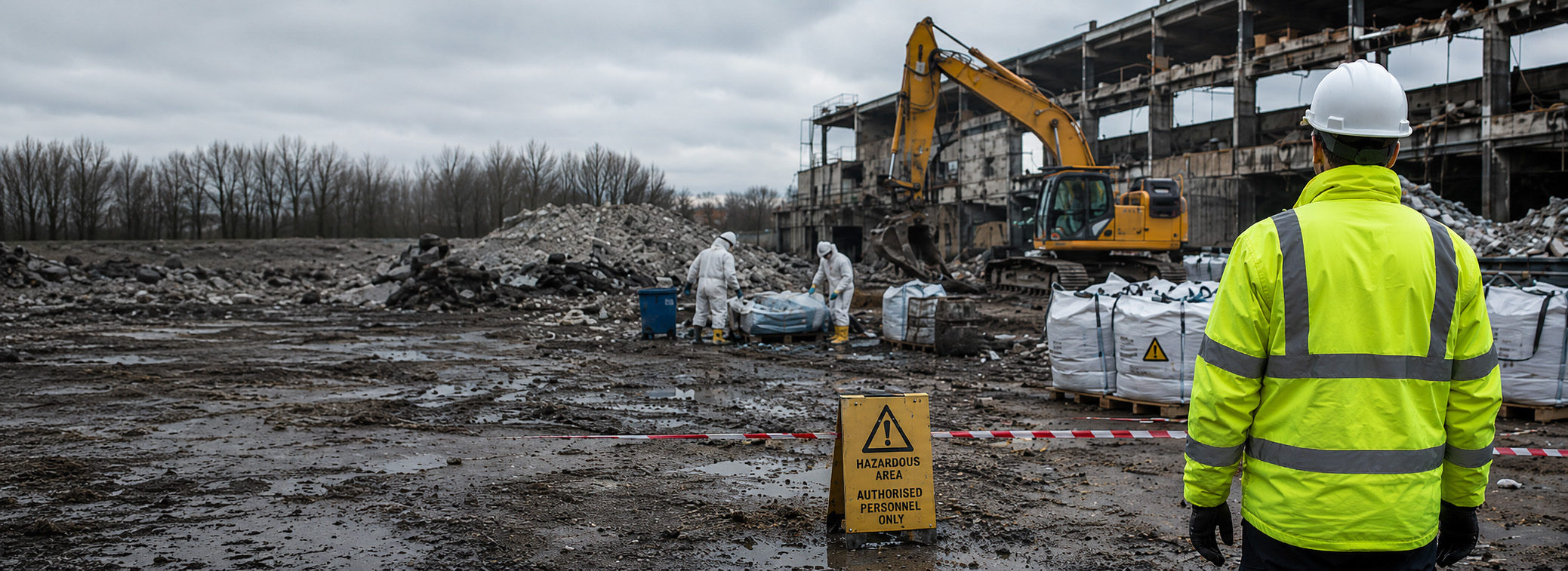
Hazardous material clearance & coordination
CrossGrid supports hazardous site clearance for commercial, industrial and redevelopment environments — helping clients identify, segregate, remove and document hazardous materials through a controlled, compliant and safety-led process.
Discuss Your ProjectHazardous site clearance is the controlled identification, segregation, removal and disposal of materials that may pose a risk to people, property or the environment. These materials can appear on brownfield sites, redundant industrial premises, warehouses, commercial units, construction sites, fly-tipping incidents and properties being prepared for demolition or redevelopment.
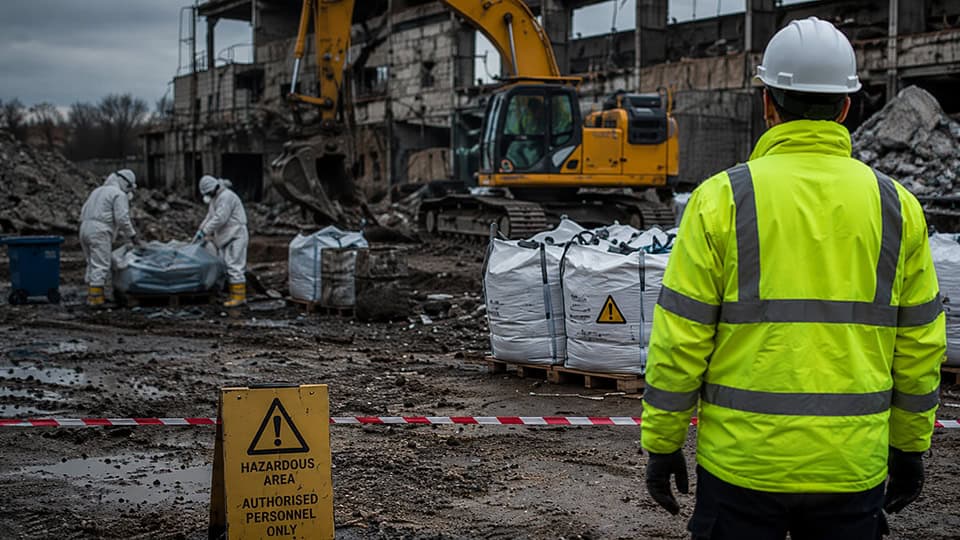
Unlike general clearance work, hazardous material clearance requires a careful approach to site assessment, classification, containment, licensed waste routes and documentation. CrossGrid helps clients manage this process by coordinating the right surveys, specialists, equipment and disposal routes so the site can move safely toward its next phase.
Site assessment & hazard identification
We review known and suspected hazardous materials, site history, access constraints, operational risks and the likely need for surveys, sampling or specialist input before clearance work begins.
Hazardous waste planning
Hazardous clearance works are planned around how each material will be identified, segregated, contained, removed, transported and documented through appropriate legal and environmental routes.
Asbestos & specialist coordination
Where asbestos or other regulated materials are suspected or confirmed, we coordinate the appropriate surveys, containment measures and licensed specialist support as part of the wider clearance plan.
Controlled removal & segregation
Hazardous, controlled and general waste streams are separated and removed using suitable containment, site controls, PPE and working methods for the materials and environment involved.
Documentation & compliant disposal
We support the project audit trail with the relevant waste documentation, including waste transfer notes, hazardous waste consignment notes and disposal records where required.
Initial review & site information
We begin by understanding the site, its previous use, known hazards, access limitations, client objectives and the reason the site needs to be cleared.
Survey, testing & classification
Where required, surveys, sampling or specialist assessments are arranged to identify materials, classify waste streams and determine the correct handling and disposal route.
Clearance plan & containment
A controlled clearance approach is agreed, including segregation areas, containment methods, exclusion zones, PPE requirements, access routes and waste movement controls.
Controlled removal & transport
Materials are removed in a planned sequence and transferred through appropriate carriers and disposal routes, with site controls maintained throughout the work.
Documentation & handover
On completion, the relevant paperwork is gathered and the cleared area is handed back in line with the agreed scope, ready for the next operational, demolition or redevelopment phase.
Compliance before clearance
Hazardous clearance work has to be planned correctly before anything is moved. CrossGrid focuses on risk identification, waste classification, safe sequencing and documentation from the start.
Specialist coordination where required
Some materials require licensed removal, specialist assessment or controlled disposal. We coordinate the right support around the project so hazardous risks are managed properly.
Clearer handover, lower risk
The aim is not just to clear the site, but to leave clients with a safer, more manageable area and the records needed to support redevelopment, demolition, landlord handover or future use.
Hazardous site clearance is the process of identifying, separating, removing and documenting materials that may pose a risk to people, property or the environment. It often involves controlled working methods, specialist input, licensed waste routes and a clear audit trail from site to disposal.
Common examples include asbestos-containing materials, contaminated soil, oils, fuels, solvents, paints, chemicals, fluorescent tubes, contaminated ductwork, underground tanks, biohazards and fly-tipped hazardous waste. Each material needs to be assessed and handled according to its risk and classification.
Where asbestos is suspected or confirmed, we coordinate the appropriate asbestos survey, containment approach and licensed removal support as part of the wider clearance plan. Asbestos should never be disturbed without the correct assessment and controls in place.
In many cases, yes. Unknown substances, contaminated soil, residues, liquids and suspicious materials may need sampling, testing or specialist classification before they can be safely handled, transported or disposed of.
Hazardous waste usually requires a clear audit trail, including hazardous waste consignment notes and disposal records. Depending on the material and project, additional survey reports, clearance certificates or specialist documentation may also be required.
Yes, subject to assessment. Fly-tipped or contaminated sites can contain mixed, unknown or hazardous materials, so the first step is to assess the site, identify risks and establish the correct clearance and disposal route before work begins.
It can if hazards are discovered late or handled without a proper plan. Early assessment helps reduce delays by identifying surveys, specialist requirements, waste routes and documentation before the wider demolition or redevelopment programme is affected.
Yes. Hazardous and controlled waste must move through appropriate legal routes. Where the project requires it, waste is transported and disposed of through suitable licensed carriers and facilities, with the relevant documentation retained for the project record.
Yes, CrossGrid supports hazardous site clearance and hazardous material coordination projects across the UK. Share the site location, suspected materials and intended next phase, and we’ll discuss the safest way to approach the work.
Hazardous materials need careful planning before anything is moved. Speak to CrossGrid about your site, suspected materials and next project phase, and we’ll talk you through the right approach.
Discuss Your Project